

Startup Garage
An open-source hardware physical space powered by AI to accelerate and guide your electronics innovation
Company Overview
Startup Garage is the world's first physical co-working facility specifically designed for open-source hardware development. We combine specialized workspace, working reference implementations, AI-powered development tool, and a collaborative engineering community to fundamentally transform how hardware innovation happens. We position ourselves as "the physical GitHub for hardware"—providing the infrastructure and community that hardware engineering has always lacked.
THE PROBLEM - Hardware Engineers Lose Months on Work That Should Take Days
The Core Pain Points:
1. Time-Consuming Trial and Error
Embedded systems engineers face enormous inefficiencies in basic development tasks. Connecting a camera to a microcontroller—a fundamental task—routinely takes weeks of trial and error. Engineers struggle with wrong cables, incompatible component versions, unclear documentation, and endless debugging cycles. Looking for usable manuals online is time-consuming and distracting, and since every workplace environment is different, online solutions often don't apply to specific situations.
2. Inaccurate Equipment and Missing Tools
Engineers frequently work with inaccurate equipment that leads to wrong results, wasting weeks before discovering the root cause. Missing tools for specific testing requirements create delays, and the process of ordering missing project components involves uncertainty about whether the correct parts are being purchased, leading to multiple order cycles and extended timelines.
3. Expensive but Ineffective Solutions
Companies currently pay millions in salaries for experienced engineers—often hiring 15+ year veterans specifically to avoid basic integration mistakes. However, even these expensive experts still face the same struggles: they Google the same problems, encounter the same trial-and-error cycles, and deal with the same knowledge gaps. When senior engineers leave companies, their accumulated knowledge dies with them, forcing new hires to start the learning process from scratch.
4. Systemic Reinvention of the Wheel
The same hardware technologies repeat across different industries—the same camera module appears in both drones and robot arms, the same sensors in automotive and IoT applications—yet each company faces identical integration challenges independently. Every organization reinvents solutions that already exist elsewhere, wasting months of development time and millions in duplicated effort.
Why This Problem is Getting WORSE:
Increasing Isolation:
Every company and startup builds isolated, proprietary labs. Engineers working in the same field don't interact across different companies. Knowledge remains trapped in proprietary silos, and the natural collaboration that could accelerate innovation is systematically prevented by corporate structures.
Open Source Hardware Lacks Physical Infrastructure:
Open-source hardware projects exist by the thousands—Arduino, Raspberry Pi, RISC-V processors, and countless community projects—but they remain scattered across online repositories without physical implementation support. Engineers can download schematics and code, but they have no physical space to touch and reverse-engineer working devices, learn from others in real-time, or test and iterate quickly with proper equipment.
The Cost:
This inefficiency costs the industry billions annually in wasted engineering time, delayed product launches, failed prototypes due to avoidable mistakes, and lost innovation opportunities when promising ideas die because teams can't execute quickly enough.
THE SOLUTION - Physical Space + Open-Source Devices + AI Tools + Community
What Startup Garage Provides:
1. Specialized Physical Workspace
We create a professional co-working facility specifically designed for hardware development, featuring:
Technology-Specific Rooms:
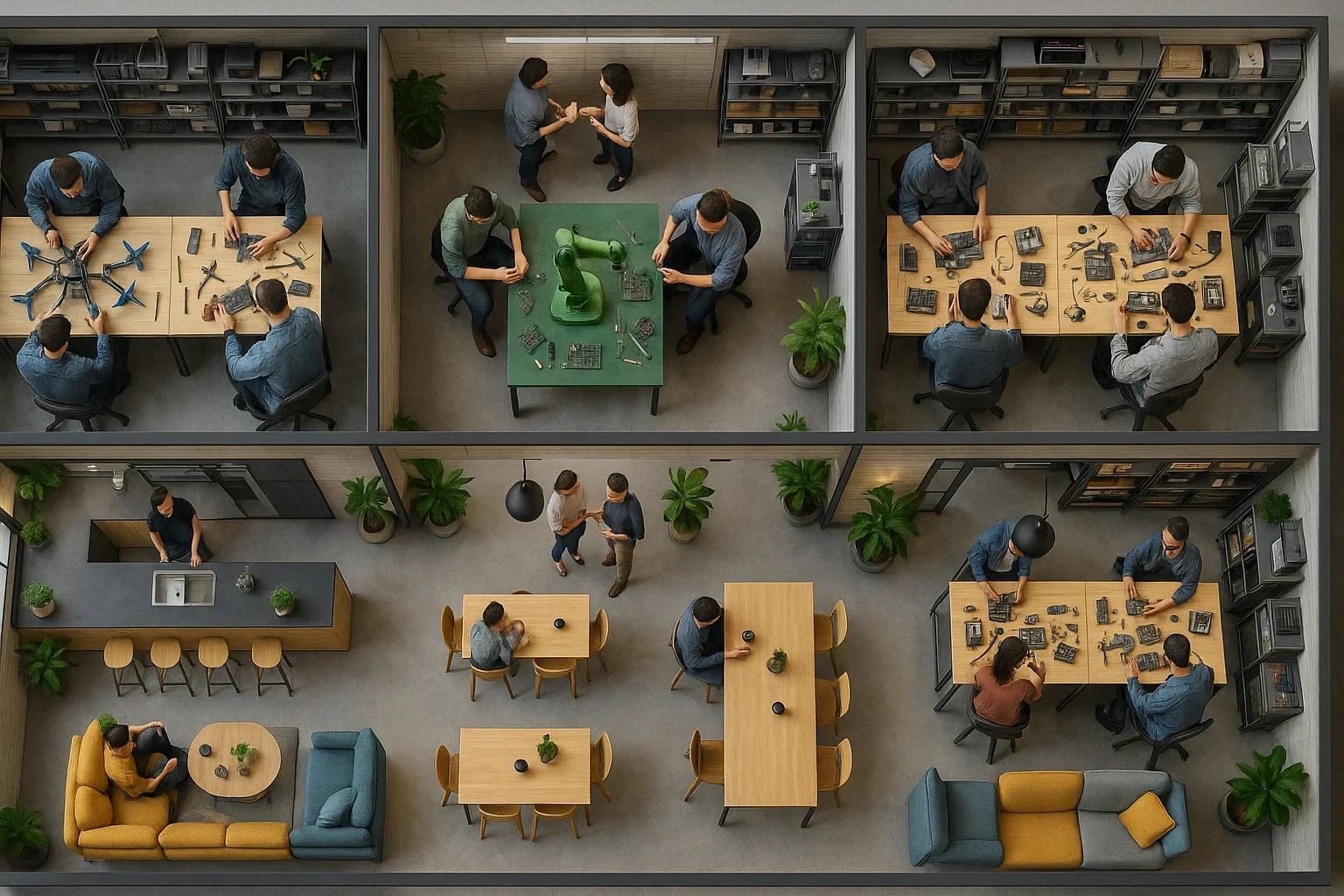
Each room focuses on one technology domain—drones, robotics, IoT, medical devices, automotive electronics, etc. This organization ensures engineers work alongside others solving similar problems, creating focused expertise communities rather than generic maker spaces.
Working Open-Source Devices:
At the center of each technology room sits a fully functional open-source reference implementation. For example, the Drone Room features a complete, working open-source drone that members can study, reverse-engineer, copy, and modify for their own projects. These aren't just components on shelves—they're proven, working systems that demonstrate successful integration.
Complete Tools and Equipment:
Each room includes all necessary development and testing tools: oscilloscopes, logic analyzers, power supplies, signal generators, multimeters, soldering stations, specialized testing equipment, and accurate measurement instruments. Members don't waste time with inaccurate equipment or missing tools—everything required for professional hardware development is available on-site.
2. AI-Powered Software Platform
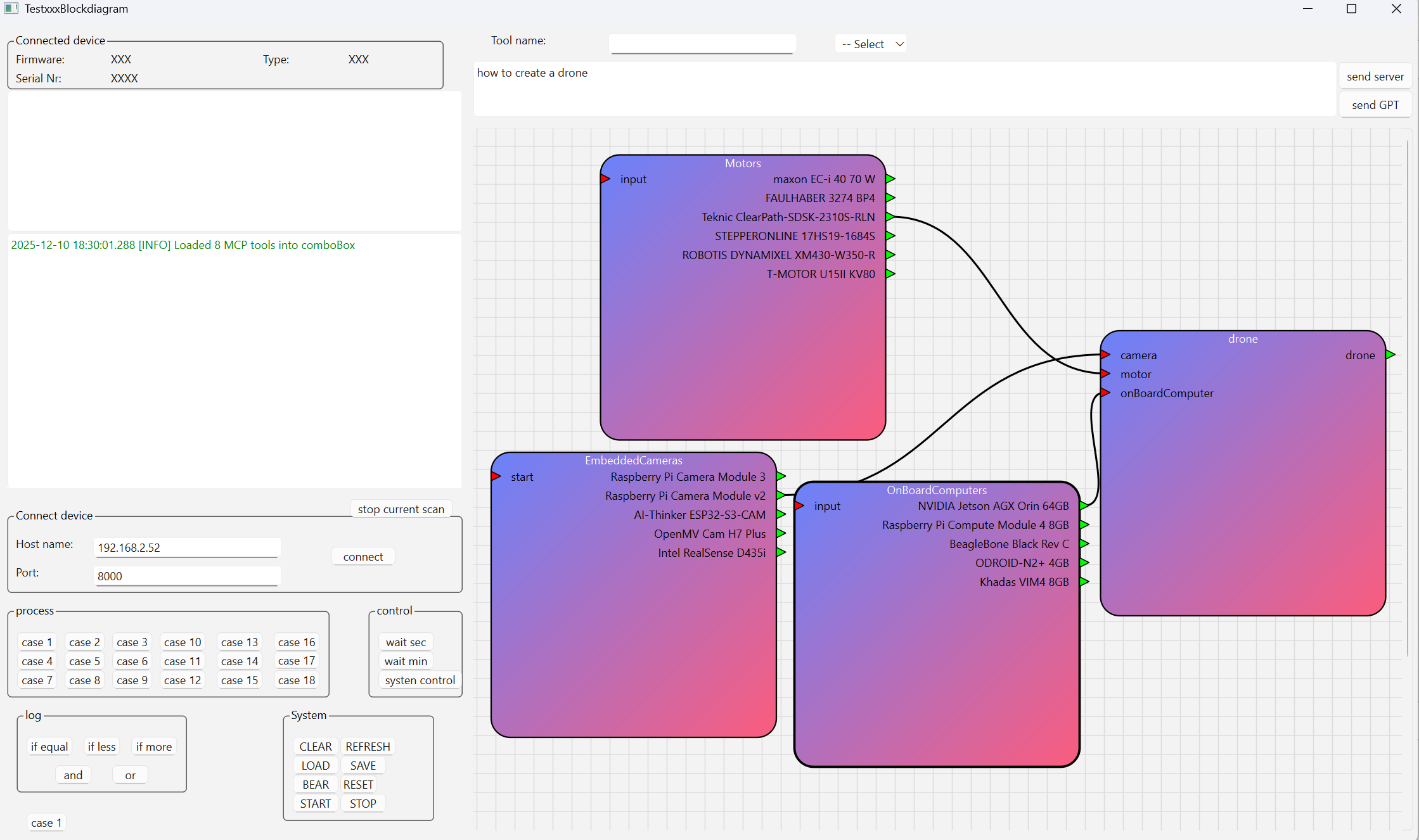
We've developed an integrated software tool that fundamentally accelerates hardware development:
Knowledge Base Access:
All documentation for electronics and devices in the garage is saved and analyzed by large language models (LLMs). When members start new designs, the AI tool can reference successful implementations, suggest component choices, and generate initial design architectures based on proven